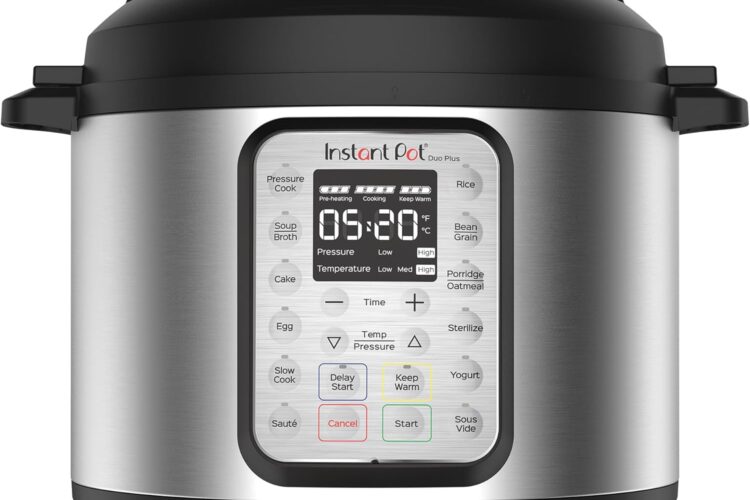
There’s a certain kind of kitchen appliance that earns its place on the counter not because it does one thing brilliantly, but because it handles a wide range of tasks competently enough that you stop reaching for five other things. The Instant Pot Duo Plus 9-in-1 in the 6-quart size is one of those appliances. It sits at the intersection of practicality and versatility in a way that has made the Duo Plus one of the more consistently discussed multi-cookers in its category.
This article isn’t a sales pitch. It’s an honest breakdown of what the Duo Plus actually does, how its nine functions work in practice, who is likely to get genuine use out of it, and what to think carefully about before deciding whether it fits your kitchen and cooking habits. Multi-cookers in general can be polarizing — some people use them almost daily, others find them sitting unused after the first month. Understanding the product properly is the best way to avoid ending up in the second camp.
Setting the Context: What the Duo Plus Is
The Instant Pot Duo Plus is an electric multi-cooker that combines nine different cooking functions into a single countertop appliance. The 6-quart size is the most widely used in the Instant Pot lineup and the one around which the vast majority of published recipes are written. This matters practically because it means recipe compatibility is broad — cookbooks, food blogs, and the companion app all tend to default to 6-quart instructions.
The appliance uses a sealed inner pot and an integrated heating element to generate pressure, maintain low temperatures for slow cooking, heat surfaces for sautéing, and sustain the warm, stable temperatures needed for yogurt fermentation. It manages all of this electronically, which is a significant departure from stovetop pressure cookers that require constant monitoring and manual heat adjustment.
The “Duo Plus” designation places this model a step above the standard Duo in the Instant Pot range. The key additions include an upgraded control panel with a progress indicator, a few additional cooking presets, and some refinements to the interface that make it slightly more intuitive for new users. These aren’t revolutionary differences, but they add up to a more comfortable experience, particularly for people who are new to pressure cooking.
The Nine Functions: What Each One Actually Does
Pressure Cooking
This is the function that put Instant Pot on the map, and it remains the most transformative one for most households. Pressure cooking works by sealing the pot and allowing steam to build up, which raises the internal temperature above the standard boiling point of water. The result is that foods cook significantly faster than they would through conventional methods.
Dried beans that would normally require soaking overnight and then simmering for over an hour can be pressure cooked from dry in under an hour. Tough cuts of meat that develop their best flavor through long, slow braising become tender in a fraction of the usual time. Dense root vegetables, whole grains, and legumes all respond well to pressure cooking. The Duo Plus offers both high and low pressure settings, which allows for more precise control depending on what’s being cooked.
Slow Cooking
The slow cook function takes the opposite approach — gentle, sustained heat over a period of several hours. This is the method of choice for recipes that develop depth through time: pulled pork, braised short ribs, hearty bean soups, and stews that taste better the longer they sit. The 6-quart capacity is well-suited to slow cooking because it accommodates large cuts of meat and generous quantities of liquid without being cramped.
One practical note worth understanding: the Instant Pot’s slow cook function operates slightly differently from a traditional slow cooker because the sealed lid traps more moisture. Recipes written specifically for this appliance account for that, but if you’re adapting a recipe from a standalone slow cooker, you may need to reduce the liquid slightly to achieve similar results.
Rice Cooking
The rice function handles white rice reliably and can be used for other grains as well. It uses temperature sensors to detect when the liquid has been absorbed and adjusts accordingly, which produces consistent results without requiring attention. For brown rice, wild rice, or other varieties with different cooking requirements, the manual pressure cook setting tends to work more effectively than the dedicated rice preset.
Steaming
The included steam rack elevates food above the liquid in the pot, allowing steam to circulate around it during cooking. This method works well for vegetables, fish fillets, shellfish, eggs, and dumplings. It’s a lighter cooking technique that tends to preserve color, texture, and nutritional content better than boiling. The 6-quart pot provides enough space to steam meaningful quantities at once, which makes this a practical everyday option rather than just an occasional feature.
Sautéing
The sauté function is one of the more genuinely useful aspects of the Duo Plus because it reduces the number of dishes involved in cooking. Most pressure-cooked and slow-cooked recipes benefit from browning aromatics or searing protein before the main cooking process begins. Being able to do that step directly in the Instant Pot inner pot — rather than browning in a separate skillet and then transferring everything over — is a meaningful convenience that people tend to appreciate more once they’ve used it regularly.
The sauté function has three heat settings: low, medium, and high. This level of control makes it more flexible than a single-temperature sauté mode and allows for tasks like reducing sauces and simmering small amounts of liquid after pressure cooking is complete.
Yogurt Making
The yogurt function is one that divides people — those who make yogurt at home tend to love it, and those who have never considered making yogurt at home wonder what the point is. The process itself is straightforward: milk is heated to pasteurize it, cooled to an appropriate temperature, combined with a starter culture, and then held at a stable warm temperature for several hours while fermentation occurs. The Instant Pot handles the temperature management automatically.
Homemade yogurt made this way is customizable in a way that store-bought isn’t. You control the thickness, the level of tanginess, the fat content, and whether or not sweeteners or flavorings are added. For households that go through a significant amount of yogurt, making it at home can also be considerably more economical over time.
Warming
The warming function maintains food at a serving temperature after cooking is complete. It activates automatically at the end of most cooking programs, which means food that finishes cooking before everyone is ready to eat doesn’t sit and cool down. It’s a straightforward feature, but it adds real convenience to everyday use.
Sterilizing
The sterilizing function uses sustained high heat to sanitize items like baby bottles, canning jars, and small kitchen tools. This is particularly relevant for new parents and for anyone who does home canning. It’s not a function that everyone uses frequently, but for those who need it, having it integrated into the appliance is genuinely useful.
The Ninth Function: Sous Vide (on select configurations)
Depending on the specific configuration of the Duo Plus, a sous vide or additional preset function may be included. It’s worth reviewing the specific model details to confirm which functions are present, as the Duo Plus lineup has seen incremental updates over time.
Key Features Beyond the Cooking Functions
The Progress Indicator
One of the distinguishing features of the Duo Plus compared to the base Duo model is a progress indicator on the display that shows where the appliance is in the cooking cycle — preheating, cooking, or in natural release. This sounds like a small detail, but for new users, not knowing what the appliance is doing during the pressurization phase is one of the main sources of uncertainty. The progress indicator removes that confusion.
The Stainless Steel Inner Pot
The cooking vessel is made from stainless steel rather than a nonstick-coated surface. Stainless steel is durable, doesn’t carry concerns about coating degradation over time, and doesn’t retain food odors between uses. It’s dishwasher-safe, which makes cleanup uncomplicated.
The trade-off is that stainless steel surfaces require a bit more attention to avoid sticking, particularly with starchy foods. Using adequate liquid and avoiding the habit of lifting the lid mid-cook on the wrong settings addresses most of these issues. It’s something that becomes second nature after a few uses.
The Sealing Lid and Safety Mechanisms
The lid includes a sealing ring that creates an airtight environment during pressure cooking. The Duo Plus incorporates multiple safety features, including a pressure release valve, a lid safety lock that prevents the lid from being opened while the pot is pressurized, and automatic temperature regulation. These mechanisms are what make electric pressure cookers significantly more approachable than their stovetop counterparts.
The sealing ring tends to absorb food odors over time, particularly after cooking strongly spiced or aromatic dishes. Replacement rings are available separately, and many Instant Pot owners keep two on hand — one for savory cooking and one for neutral or sweet dishes like yogurt and desserts.
The Companion App
The free companion app includes access to over 800 recipes specifically developed for the Instant Pot platform. The app organizes recipes by function, ingredient, cuisine type, and dietary preference, which makes it genuinely useful as a starting point for people learning what the appliance can do. It also includes instructional content for new users navigating the pressure cooking process for the first time.
Practical Uses Across Different Household Types
Families Cooking Regular Meals
The 6-quart capacity is well-calibrated for a family of four to six people. A full batch of chili, a large pot of soup, or a whole chicken with vegetables all fit comfortably. The ability to pressure cook proteins from frozen is particularly useful for households where meal planning doesn’t always go as intended — a frozen block of chicken thighs can become a finished dinner in under an hour without any advance thawing.
The sauté and pressure cook combination also shortens the active time involved in making dishes that traditionally require significant hands-on attention. A braise that would normally demand ninety minutes of stovetop supervision can be set in the Instant Pot and left while other things are handled.
Meal Preppers and Batch Cookers
For anyone who sets aside time once or twice a week to prepare ingredients in bulk, the Duo Plus handles volume efficiently. Large batches of grains, legumes, shredded meat, and cooked vegetables can be prepared in a single session, portioned, and stored for the week ahead. The capacity and speed of pressure cooking make this a particularly time-efficient approach.
People with Dietary Restrictions or Specific Eating Patterns
Cooking from scratch is often easier to control than relying on packaged foods when managing food intolerances, allergies, or specific nutritional goals. The Instant Pot enables efficient preparation of whole foods — beans, lentils, grains, broths — from their unprocessed forms. This kind of cooking is often avoided because of the time it takes on the stovetop, but pressure cooking reduces that barrier significantly.
Home Cooks Exploring New Techniques
For anyone who wants to experiment with slow braises, stocks, fermented dairy, or steamed preparations without investing in multiple specialized appliances, the Duo Plus offers a low-friction entry point. Learning to use it well does take a few sessions, but the range of techniques it makes accessible from a single device is meaningful.
What to Think About Before Purchasing
Storage and Counter Space
The 6-quart Duo Plus is not a small appliance. It’s roughly the size of a large stockpot when accounting for height, including the lid. Counter space and cabinet storage should be considered before purchasing. People with small kitchens sometimes find that the appliance ends up stored away after initial enthusiasm, which reduces how often it actually gets used. If it lives in a cabinet, it tends to get used less than if it sits on the counter.
The Learning Curve
Electric pressure cooking has a learning curve that’s real even if it’s not steep. The first few uses tend to involve some uncertainty around how much liquid to use, how long various foods actually take, when to use natural pressure release versus manual release, and how to adapt conventional recipes. The companion app and the included quick reference guide address much of this, but going in with patience during the initial period sets more realistic expectations.
Cooking for One or Two People
The 6-quart capacity is well-suited to families and batch cooking, but it can feel disproportionate for individuals or couples who aren’t interested in making large quantities at once. The minimum liquid requirements for pressure cooking mean that very small amounts of food aren’t practical in this size. For smaller households, the 3-quart Duo Mini is worth considering as an alternative.
The Instant Pot Is Not a Replacement for Everything
A common misconception is that a multi-cooker replaces every other cooking appliance. It doesn’t. It won’t produce the texture of oven-roasted vegetables, the crust on a properly seared steak, or the results of a convection oven bake. It’s a strong addition to a kitchen rather than a wholesale replacement for conventional methods, and it’s most useful when understood in that context.
How Electric Multi-Cookers Compare as a Category
Electric multi-cookers occupy a specific and useful position within the broader landscape of kitchen appliances. Compared to a standalone stovetop pressure cooker, the electric version offers automated pressure management, programmable timers, and the safety of electronic controls — meaningful differences for home cooks who aren’t familiar with manual pressure regulation.
Compared to a standalone slow cooker, the multi-cooker adds pressure cooking, sautéing, and steaming to the available methods, consolidating multiple appliances. Compared to a basic rice cooker, it handles a far broader range of cooking tasks without a significant increase in footprint.
The trade-off across all of these comparisons is that single-function appliances sometimes do their one job marginally better than a multi-function device. A dedicated rice cooker with a fuzzy logic system may produce slightly better rice consistency than a multi-cooker preset. A dedicated slow cooker with a glass lid may allow for easier visual monitoring. These distinctions matter in some households and are irrelevant in others.
The Duo Plus positions itself as a practical consolidation tool — fewer devices, a smaller storage footprint, and broad functionality at a reasonable level of performance across all nine functions.
Frequently Asked Questions
How long does it actually take to pressure cook something?
The cooking time on the display doesn’t account for the time it takes to build pressure before cooking begins. This preheating phase typically adds ten to twenty-five minutes depending on the volume and temperature of the contents. A recipe listed as a twenty-minute pressure cook may take closer to forty minutes from the moment you press start. Planning around total time rather than listed cook time is important for accurate meal timing.
Can frozen food go directly into the Instant Pot?
Yes, most frozen proteins can be cooked directly from frozen under pressure. Cooking time needs to be extended to account for the temperature difference, and it’s worth checking that the food is fully cooked through before serving. The appliance handles this well in general, though very thick or large frozen items may require adjustment.
What happens if the sealing ring is damaged or lost?
The sealing ring is essential for pressure cooking — without a proper seal, the pot won’t reach pressure. Replacement rings are readily available and relatively inexpensive. Keeping a spare is a good habit, particularly given that the rings can degrade over time with regular use.
Is it energy-efficient?
Because pressure cooking shortens total cook time, the overall energy consumption for a given meal tends to be lower than with conventional stovetop or oven methods, even though the appliance itself draws a meaningful amount of power while running. Slow cooking uses lower power over a longer duration, which has its own efficiency profile. Overall, multi-cookers are generally considered reasonably efficient relative to conventional methods for the same dishes.
Can it be used for canning?
This is an important clarification. The Instant Pot is not recommended for pressure canning, which requires specific, validated pressure levels and processing times for food safety. The sterilizing function is suitable for equipment sterilization, but the appliance should not be used as a substitute for a dedicated pressure canner for home food preservation.
How do you know when it’s safe to open the lid?
The float valve on the lid drops down when all pressure has been released, indicating it’s safe to open. Until that valve drops, the lid lock remains engaged. This is an automatic safety feature and doesn’t require the user to judge when pressure has dropped — the appliance communicates that directly.
Conclusion
The Instant Pot Duo Plus 9-in-1 in the 6-quart size is a thoughtfully designed multi-cooker that earns its reputation through functional breadth and practical convenience rather than any single standout feature. The nine cooking modes cover a genuine range of techniques, the 6-quart capacity is appropriate for most family cooking, and the upgraded display and progress indicator make the experience more accessible than earlier models in the lineup.
It’s not the right appliance for every household. Smaller households may find the capacity excessive for everyday use, and anyone expecting to eliminate all other kitchen tools will be disappointed. But for families that cook regularly, people who want to expand their cooking methods without accumulating a collection of single-purpose appliances, and home cooks who want to make dishes like slow-braised meats, homemade yogurt, and pressure-cooked legumes part of their regular rotation, the Duo Plus covers a lot of ground efficiently.
As with any appliance, the value it provides is proportional to how consistently it gets used. The learning curve is manageable, the recipe resources are genuinely helpful, and the combination of functions is broad enough that regular use across multiple modes is realistic rather than aspirational.