The Instant Pot Duo Mini 3-Quart: A Practical Guide to What It Does and Who It’s Really For
There’s a reason Instant Pot became a household name over the past decade. The brand managed to take something that used to feel complicated — pressure cooking — and make it approachable enough for people who had never gone near a stovetop pressure cooker in their lives. The Duo 7-in-1 Mini in the 3-quart size is one of the more interesting entries in that lineup, and it deserves a closer look than it usually gets.
Most of the attention around Instant Pot tends to go to the larger 6-quart and 8-quart models. The Mini often gets treated as an afterthought, a smaller version for people who ran out of counter space. That framing undersells it. For certain households and certain cooking habits, the 3-quart size isn’t a compromise — it’s genuinely the right choice. This article breaks down what the Instant Pot Duo Mini actually does, how it works across its different functions, who stands to benefit most from owning one, and what to keep in mind before picking it up.
What the Instant Pot Duo 7-in-1 Mini Actually Is
At its core, this is an electric multi-cooker. The “7-in-1” in the name refers to the seven cooking functions it’s designed to handle: pressure cooking, slow cooking, rice cooking, steaming, sautéing, warming, and yogurt making. It also includes a sterilizing function, which has practical uses beyond the kitchen.
The unit is built around a stainless steel inner pot and houses a heating element, sensors, and a sealed lid designed to trap steam for pressure cooking. Unlike stovetop models, there are no open flames involved, and the pressure is managed electronically, which gives it a level of consistency that’s hard to match manually.
The 3-quart capacity is the defining characteristic of this particular model. To put that in context, most recipes written for the standard Instant Pot assume a 6-quart unit. Three quarts holds roughly half that volume. This isn’t a limitation so much as a design intention — the Mini is built for smaller-scale cooking, and it excels in that context.
A Closer Look at the Key Features
The Seven Cooking Modes
Each of the seven functions operates a little differently, and understanding them helps set realistic expectations.
Pressure cooking is the headline function. The appliance builds pressure inside the sealed pot, raising the cooking temperature above what boiling water normally reaches. This dramatically shortens cooking times for things like dried beans, tough cuts of meat, grains, soups, and stews. A pot of chickpeas that might take ninety minutes to boil on the stove can be done in under thirty minutes under pressure. The Duo Mini offers both high and low pressure settings, which gives a bit more flexibility depending on what you’re cooking.
Slow cooking works in the opposite direction — low heat over a long period of time. It’s ideal for dishes that develop flavor gradually, like pulled meats, chilis, or braised vegetables. The slow cook function on this model operates similarly to a standalone slow cooker, though some users find that the sealed environment affects moisture levels slightly differently than open-lid slow cookers. It’s worth keeping that in mind when adapting recipes.
The rice cooker function handles white rice well and can also be used for other grains. It automatically adjusts cooking time based on temperature feedback, which helps avoid the burnt-bottom problem that comes with stovetop rice.
Steaming uses the included steam rack to lift food above water, cooking it with indirect heat. This works well for vegetables, fish, eggs, and dumplings. It’s a lighter cooking method that preserves texture and nutrients reasonably well.
The sauté function turns the inner pot into something close to a skillet. You can brown onions, sear meat, or reduce sauces directly in the pot before switching to another cooking mode. This is particularly convenient because it means fewer dishes overall — you’re not browning in a separate pan and then transferring everything over.
The yogurt maker function is one that surprises people who have never used it. The process involves heating milk to a certain temperature, cooling it, adding a starter culture, and then holding it at a warm temperature for several hours. The Instant Pot handles the temperature control automatically, which removes most of the guesswork. The result is plain yogurt that can be strained, sweetened, or flavored as preferred.
Warming mode keeps food at a serving temperature after cooking is finished, which is a straightforward but genuinely useful feature when meals aren’t being served immediately.
The sterilizing function is relevant for people who need to sanitize baby bottles, canning jars, or small kitchen tools. It’s not a feature that everyone will use regularly, but it adds real utility in the right household.
The Stainless Steel Inner Pot
The cooking vessel itself is made from stainless steel, which matters for a few reasons. Stainless steel doesn’t hold onto food odors the way some coated surfaces do, it’s generally considered food-safe, and it holds up well to repeated use without the concern of a nonstick coating wearing down over time. It’s also dishwasher-safe, which simplifies cleanup.
The one adjustment that comes with stainless steel is that food can stick more easily than it would on a nonstick surface, particularly with starchy foods like rice or grains. A small amount of oil or water usually addresses this, and it becomes second nature after a few uses.
The Control Panel
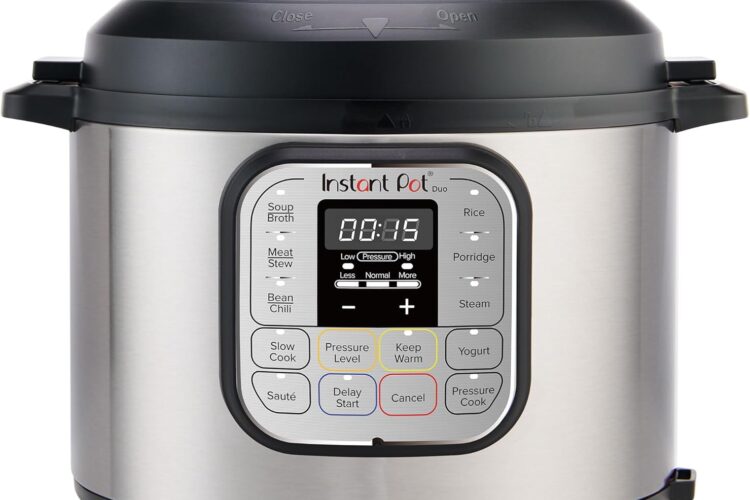
The control panel on the Duo Mini uses a combination of preset buttons and manual adjustments. The presets are labeled for common dishes — soup, meat, bean, rice, and so on — and they apply a default time and pressure level appropriate for that category. These presets can be manually adjusted if needed, which gives more control once you’re comfortable with the appliance.
The display shows the cooking time and mode, and a series of indicator lights confirm which function is active. It’s not a complicated interface, and most people find it straightforward after reading through the manual once.
The Companion App and Recipe Access
One of the more underrated aspects of this product is the companion app, which comes free and includes access to over 1,900 recipes. For anyone new to pressure cooking or electric multi-cookers, this resource is worth using seriously. The recipes are organized by function, cooking time, and ingredient, which makes it easy to figure out what’s actually possible with the appliance.
The app also helps bridge the gap between the 3-quart capacity and the wider world of Instant Pot recipes, many of which are written for larger models. Understanding how to scale recipes down correctly is one of the more practical skills to develop early on, and the app offers guidance in that area.
How the Instant Pot Duo Mini Can Be Used in Practice
Weekday Meal Preparation
One of the most common use cases for a multi-cooker this size is mid-week cooking for one or two people. If the goal is to prepare a single meal rather than a large batch, the 3-quart pot is well-suited to that. A portion of soup, a serving of lentils, a couple of chicken thighs — these all fit comfortably and cook efficiently.
The sauté and pressure cook combination also makes it easier to build flavor in a single vessel. Starting with aromatics in sauté mode, adding liquid and protein, then switching to pressure cook produces results that would otherwise require multiple pots and significantly more time.
Cooking for Small Households
Couples and individuals living alone often find that standard kitchen appliances are sized for families. A 6-quart slow cooker produces enough food for six servings minimum. A large rice cooker makes far more rice than two people can reasonably eat. The Instant Pot Duo Mini addresses this by being proportionally smaller — it’s calibrated for two to three servings rather than four to six.
This also means less wasted food and more manageable leftovers, which is a practical consideration that doesn’t get discussed enough in kitchen appliance conversations.
Supplemental Cooking During Gatherings
For people who already own a larger Instant Pot or oven, the Mini serves well as an auxiliary appliance during meals where multiple dishes are being prepared simultaneously. It can handle one element of a meal — a side dish, a sauce, a grain — while the oven or stovetop handles the rest. Counter space permitting, this kind of parallel cooking can meaningfully reduce the total time spent in the kitchen.
Dorm Rooms, Small Apartments, and Compact Living Spaces
The physical footprint of the 3-quart model is noticeably smaller than its larger counterparts, and its electrical requirements are standard. This makes it workable in environments where kitchen space is limited — college dorm rooms, studio apartments, or small shared kitchens. The self-contained nature of the appliance (one pot, one lid, no stovetop required) also appeals to people cooking in spaces without full kitchen setups.
Meal Prep for Specific Dietary Needs
For people managing specific dietary patterns — low-carb, plant-based, allergen-restricted — the ability to cook beans, grains, and vegetables from scratch in a short period of time is genuinely useful. Dried legumes are significantly cheaper than canned versions and cook well under pressure. Having an appliance that makes that process fast enough to be practical on a weeknight changes the calculus for a lot of home cooks.
Who This Product May Be Suitable For
The Instant Pot Duo Mini in 3-quart is a good fit for people who cook for one to three people on a regular basis. It suits those who want the versatility of multiple cooking methods in a single appliance without taking up the counter space of several separate devices. It works well for anyone new to pressure cooking who wants to start with a manageable size before committing to a larger unit.
It’s also worth considering for people who travel in RVs or spend time in vacation rentals, where kitchen equipment tends to be minimal. Bringing a single appliance that can pressure cook, slow cook, sauté, and steam covers a significant range of cooking needs.
Those who make yogurt at home, or have been curious about the process, may also find this model particularly interesting given how seamlessly that function integrates into the appliance.
Important Considerations Before Purchasing
Capacity Limitations
The 3-quart capacity is the factor that most often catches people off guard. It handles meals for two comfortably and can stretch to three, but it’s genuinely not suited for feeding a family of four or more on a regular basis. Recipes intended for larger Instant Pot models will need to be scaled down, and not all recipes translate proportionally without some adjustment.
Learning Curve
Electric pressure cookers do have a learning curve, particularly around understanding when to use the pressure release valve manually versus letting the pressure drop naturally. The difference matters depending on what’s being cooked, and getting it wrong can affect texture or cause liquid to spray out of the valve. This is not a dangerous problem when handled according to the instructions, but it does require a bit of attention in the early stages.
Recipe Scaling
As mentioned, most widely available Instant Pot recipes are written for a 6-quart unit. Halving ingredient quantities doesn’t always work straightforwardly, particularly with liquid ratios and cooking times. The companion app helps with this, but it’s worth going in with realistic expectations about the adjustment period.
Not a Replacement for Everything
The Duo Mini handles many cooking tasks well, but it’s not a substitute for every kitchen appliance. It won’t replace a large stockpot for making big batches of broth, and it’s not well-suited for foods that benefit from dry heat, like roasted vegetables or baked goods. It fits naturally into a kitchen as one capable tool among several rather than a singular all-in-one solution.
Electric Multi-Cookers in General: Understanding the Category
For context, it helps to understand where this product sits within the broader category of electric multi-cookers. At one end of the spectrum are basic rice cookers with a single function. At the other end are more advanced appliances with air frying capabilities, sous vide functions, or smart home integration.
The Instant Pot Duo line occupies a middle ground — functional, approachable, and broad in its capabilities without venturing into territory that requires significant technical knowledge to use well. The 3-quart Mini is the most compact version within this segment, making it the natural choice when capacity requirements are modest.
Compared to standalone slow cookers, the multi-cooker format offers more flexibility in terms of cooking methods and active temperature control. Compared to stovetop pressure cookers, the electric version offers automated pressure management and the ability to walk away from the kitchen without monitoring the heat source. These are meaningful practical differences that explain why multi-cookers have grown so significantly in popularity.
Frequently Asked Questions
Can the 3-quart version handle a whole chicken?
A small chicken or a spatchcocked chicken may fit, but it would be tight. The 3-quart capacity is better suited to bone-in pieces or smaller cuts rather than a whole bird. If cooking whole chickens is a regular goal, the 6-quart model would serve better.
How much liquid is needed for pressure cooking?
Most guidance recommends at least one cup of liquid for pressure cooking, though this can vary depending on the recipe and what else is in the pot. The liquid is necessary to generate steam and build pressure. Recipes developed specifically for the 3-quart model account for this, which is one reason using the companion app is helpful early on.
Is the inner pot compatible with other Instant Pot models?
The 3-quart inner pot and accessories are not interchangeable with 6-quart or 8-quart models due to the size difference. Replacement parts and accessories are available separately and are specific to the 3-quart size.
How loud is it during cooking?
During most cooking modes, the appliance operates quietly. The steam release — either manual or natural — produces some hissing sound, but this is brief. General operation during pressure cooking is relatively quiet.
Is it safe to leave unattended?
The appliance includes multiple built-in safety features, including lid safety, automatic temperature control, and pressure regulation. Many people use it during the day or overnight for slow cooking. That said, the manufacturer’s guidance and common-sense appliance safety practices should always be followed.
How do you clean it?
The inner pot, steam rack, and sealing ring are all removable and dishwasher-safe. The outer housing can be wiped down with a damp cloth. The sealing ring may absorb food odors over time and can be replaced when needed — spare rings are available separately.
Conclusion
The Instant Pot Duo 7-in-1 Mini in the 3-quart size is a well-designed, genuinely versatile appliance that makes the most sense for specific households and use cases. It’s not the right tool for everyone — anyone regularly cooking for four or more people would find it limiting — but for individuals, couples, and small households, it covers a lot of ground in a compact form.
The combination of pressure cooking, slow cooking, rice cooking, steaming, sautéing, yogurt making, warming, and sterilizing in a single appliance reduces the need for multiple single-function devices. The stainless steel inner pot is durable and easy to clean, and the companion app provides a genuinely useful library of recipes calibrated to the appliance.
The learning curve is real but manageable. Most people find that after a handful of uses, the process becomes routine, and the time savings from pressure cooking alone tend to justify the initial adjustment period.