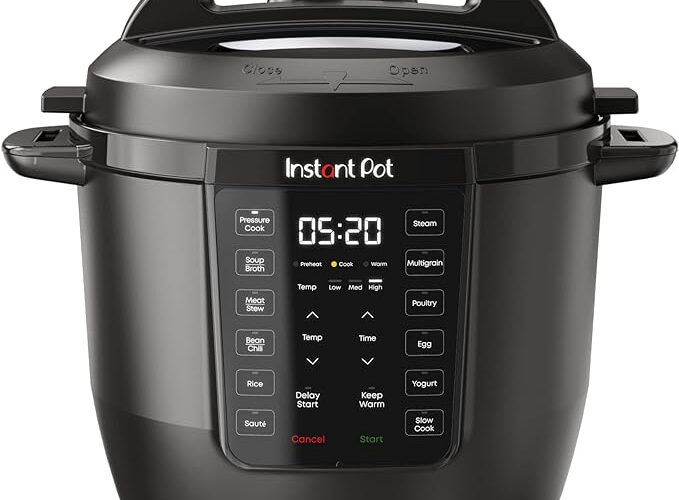
Is the Instant Pot RIO 7-in-1 Worth Adding to Your Kitchen?
There’s a good reason multi-cookers have become a staple in so many households over the past decade. The idea of replacing several appliances with one compact, easy-to-use device is genuinely appealing, especially for people who cook regularly but don’t want their kitchen counter looking like a small appliance showroom.
The Instant Pot RIO 7-in-1 Multi-Cooker sits in that space. It’s a pressure cooker, slow cooker, rice maker, steamer, sauté pan, yogurt maker, and warmer — all rolled into one 6-quart black unit that’s designed for everyday home cooking. Whether you’ve been curious about pressure cooking for a while or you’re simply looking for a more efficient way to get meals on the table, this appliance has a lot to unpack.
This article walks through everything you’d want to know before deciding whether the Instant Pot RIO fits your kitchen and your routine.
What Is the Instant Pot RIO?
The RIO is part of Instant Pot’s broader lineup of electric multi-cookers. It’s positioned as a practical, no-frills option that covers the core functions most home cooks actually use. The 7-in-1 name refers to its seven cooking modes, which are built into the control panel and accessible without needing to consult a manual every time.
The 6-quart size is considered the standard for most households. It’s large enough to cook meals for a family of four to six people and small enough to store without much hassle. The black finish gives it a clean, modern look that tends to blend into most kitchen setups without drawing too much attention.
At its core, the RIO is designed to simplify meal preparation. That’s the pitch. Whether it delivers on that depends on how you cook and what you’re hoping to get out of it.
Key Features Worth Knowing About
Seven Cooking Functions in One Unit
The headline feature is the combination of cooking modes. Here’s a quick breakdown of what each one actually does:
Pressure Cooking is the function most people associate with Instant Pot products. It uses steam pressure to cook food significantly faster than conventional methods. Dried beans that would normally take a couple of hours on the stove can be ready in under an hour. Tough cuts of meat become tender in a fraction of the time it would take in an oven.
Slow Cooking works in the opposite direction. Instead of high heat and pressure, it uses low, sustained heat over several hours. This is useful for soups, stews, and braised dishes where long, gentle cooking develops flavor gradually. If you’re used to a traditional slow cooker, this function should feel familiar.
Sauté allows you to brown onions, sear meat, or cook aromatics directly in the pot before switching to another cooking mode. This is one of the more convenient features because it eliminates the need to dirty a separate pan. You can start a recipe by sautéing garlic and onion, then switch to pressure cooking without any extra steps.
Steaming is handled through the steam function, which works well for vegetables, dumplings, fish, and other items that benefit from moist heat. You’ll need the included steam rack for most of these uses.
Rice Making is a dedicated mode calibrated for cooking white rice. The pot handles the water-to-rice ratio and cooking time automatically, which takes the guesswork out of a dish that’s easy to get slightly wrong.
Yogurt Making is a function that surprises a lot of new users. The pot can maintain the low, steady temperature needed to culture yogurt, allowing you to make it from scratch at home using just milk and a starter culture. It takes several hours but requires very little active involvement.
Warming keeps food at a safe serving temperature after cooking is finished, which is helpful if meals are being prepared ahead of time or if there’s a gap between when food is ready and when people are actually eating.
Capacity and Build
The 6-quart inner pot is made from stainless steel, which is durable, easy to clean, and compatible with most standard dishwashers. The capacity is generous enough for batch cooking, large cuts of meat, or recipes that are deliberately made in volume for meal prep purposes.
The outer housing is plastic with a brushed finish on the display panel area. It’s not particularly heavy, which makes it reasonably easy to move around or store in a cabinet when not in use.
Safety Mechanisms
Pressure cooking is the function that tends to make new users a little cautious, and understandably so. The RIO includes multiple safety features designed to prevent issues from arising. These include a lid lock that prevents opening under pressure, automatic pressure release controls, and sensors that monitor temperature and pressure throughout the cooking process.
You don’t need to monitor the pot constantly while it’s running. Once the settings are entered and the lid is locked, the cooker manages itself.
Control Panel
The controls are straightforward. There are preset buttons for each of the seven functions, along with manual options for adjusting pressure level, time, and temperature depending on the mode you’re using. The display shows the selected function, cooking time, and progress during a session. It’s designed to be usable without reading through the documentation every time you cook.
Practical Ways to Use the Instant Pot RIO
Weeknight Dinners
One of the most common use cases for a multi-cooker is getting dinner ready on a weeknight when time is tight. Dishes like chicken thighs with vegetables, lentil soup, pasta in sauce, and pulled pork are all well-suited to pressure cooking because they can go from raw ingredients to finished meal in under an hour, often in significantly less time.
The sauté function makes this even more practical because you can brown your protein directly in the pot before adding liquids and switching modes. That step adds flavor without adding extra dishes to clean.
Batch Cooking and Meal Prep
If you prefer to cook large amounts of food at once and portion it out across the week, the 6-quart capacity handles that kind of volume well. Grains like rice, farro, and quinoa can be cooked in bulk. A large pot of beans or chickpeas cooked from dried is significantly cheaper than buying canned, and the pressure cooker dramatically reduces the time involved.
Soups and stews are natural fits for batch cooking in a multi-cooker. They hold up well in the refrigerator for several days and often taste better the day after cooking.
Slow-Cooked Dishes
Not everything benefits from pressure cooking. Some dishes genuinely improve with long, slow cooking — things like beef stew, chili, or braised short ribs. The slow cooker function makes these kinds of recipes accessible without requiring a separate appliance.
If your household already relies on a slow cooker for certain recipes, the RIO can handle that role as well, potentially allowing you to consolidate appliances.
Homemade Yogurt
The yogurt function opens up a niche but genuinely useful capability. Homemade yogurt requires milk to be heated, cooled, mixed with a starter culture, and then held at a consistent low temperature for eight to twelve hours. The pot manages the temperature-holding phase automatically, which is the part that was previously difficult without dedicated equipment.
The result is plain yogurt that can be strained for a thicker consistency, sweetened, or flavored to preference. For people who eat yogurt regularly, making it at home can be a cost-effective habit over time.
Side Dishes
Steamed vegetables, cooked rice, and warm dishes that need to hold before serving are all covered by different functions on the RIO. Even if you don’t use the pressure cooking function heavily, having a dedicated rice mode and a steam function available adds flexibility to how you plan meals.
Who the Instant Pot RIO Might Work Well For
People who are new to pressure cooking will likely find the RIO approachable. The preset functions remove a lot of the uncertainty involved in learning a new cooking method, and the safety features make it less intimidating than older stovetop pressure cooker models.
Households cooking for three to six people will find the 6-quart size practical. It’s large enough to cook a meaningful volume of food without being oversized for everyday meals.
Anyone interested in meal prep or batch cooking will benefit from the combination of a large capacity, multiple cooking modes, and the ability to keep food warm after cooking is finished.
Cooks who already use a slow cooker, rice cooker, and steamer separately might find that consolidating those functions into a single appliance frees up counter space and simplifies cleanup.
People who are comfortable with manual cooking and prefer to control every variable themselves may find the preset functions limiting. The RIO is designed around convenience and ease of use, which means some flexibility is traded for simplicity.
Things to Think About Before Purchasing
Learning Curve
Even though the RIO is designed to be straightforward, there is a period of adjustment involved. Pressure cooking behaves differently from stovetop cooking, and recipes written for conventional methods don’t always translate directly. Cooking times, liquid requirements, and expected results can all differ. Most users report feeling comfortable with the appliance after a handful of uses, but the first few sessions may require some patience.
Size and Storage
The 6-quart model is not small. It takes up a meaningful footprint on a counter and isn’t the easiest appliance to tuck into a crowded cabinet. If kitchen space is a genuine constraint, this is worth factoring in before purchasing.
Not All Foods Are Ideal for Pressure Cooking
Pressure cooking is excellent for soups, stews, legumes, grains, and tough cuts of meat. It’s less well-suited for quick-cooking foods like thin fish fillets, leafy vegetables, or anything that benefits from dry heat. The multi-cooker format addresses some of this limitation by offering steaming and sautéing, but it isn’t a replacement for every cooking method.
Requires Liquid
Pressure cooking requires a minimum amount of liquid to generate steam. Recipes that are very dry or low-moisture may not work in pressure cooking mode. This is a characteristic of all electric pressure cookers, not just the RIO specifically.
Cleaning
The inner pot, sealing ring, and steam rack are all dishwasher safe, which makes regular cleaning relatively convenient. The sealing ring can absorb odors from strongly scented dishes over time. Many users keep more than one ring on hand and alternate based on whether they’re cooking savory or sweet dishes.
How Multi-Cookers Compare Generally
It’s worth understanding where multi-cookers like the RIO fit within the broader category of kitchen appliances, particularly if you’re deciding between different types of cooking tools.
Traditional Stovetop Pressure Cookers operate on the same basic principle — pressurized steam to cook food faster — but require direct monitoring on the stove and typically have a steeper learning curve. They are also less versatile since they don’t include slow cooking, yogurt, or warming functions.
Dedicated Slow Cookers are purpose-built for low, slow cooking and are often less expensive as standalone appliances. They don’t offer the speed of pressure cooking, but they’re simple to use and reliable for the specific style of cooking they’re designed for.
Rice Cookers are excellent at cooking rice and nothing else. For households that eat rice daily, a dedicated rice cooker can be worth having. For everyone else, having the function available inside a multi-cooker is more practical.
Air Fryers have become popular as a companion or alternative to multi-cookers. They use circulated hot air to crisp food without deep frying. The RIO does not include an air fryer function, so if that’s a priority, a separate appliance or a different multi-cooker model with that capability would be worth looking into.
Instant Pot’s Own Lineup includes models with additional functions, larger capacities, and more manual controls. The RIO sits toward the accessible end of the range — well-featured without being overwhelming.
Frequently Asked Questions
Is the 6-quart size appropriate for a couple or a small household?
The 6-quart capacity is generally considered versatile enough for anywhere from two to six people depending on the dish. For a couple, it may produce more food than needed in a single session, which works well if the goal is to have leftovers. For some recipes that require a minimum volume of liquid, the larger size is actually helpful even when cooking smaller portions.
How long does pressure cooking actually take?
The total time includes a period where the pot builds pressure, the actual cooking time, and then the time needed to release pressure. The build-up phase can take anywhere from five to fifteen minutes depending on how much food and liquid is inside. Recipes typically list the cooking time itself without accounting for this, so it’s worth building in extra time when planning meals.
Can it be used to cook frozen meat?
Yes, pressure cooking can handle frozen meat, though cooking times will need to be extended. It’s generally recommended to add extra time to account for the lower starting temperature. This is one of the functions that users frequently find useful for last-minute meal planning.
Is it safe to leave the pot unattended?
The appliance is designed with this in mind. The safety mechanisms, automatic pressure management, and the warm function that activates after cooking is complete make it suitable for unattended operation during normal use. That said, using any appliance responsibly and following the guidelines in the manual is always advisable.
How difficult is cleanup?
The inner pot and most removable components are dishwasher safe. The outer housing should be wiped down rather than submerged. The sealing ring requires periodic inspection and replacement over time, as it can degrade or retain odors.
What kinds of recipes work best?
Soups, stews, legumes, grains, braised meats, and rice are consistently reliable. Curries, bone broth, and pulled meat dishes are also frequently made in multi-cookers and tend to produce good results. Baked goods can technically be made in a multi-cooker, though the results differ from oven baking.
A Few Words on Getting Started
If you do end up bringing a multi-cooker like the RIO into your kitchen, the general advice from experienced users is to start simple. A soup or a pot of rice is a good first session because both are forgiving and allow you to get comfortable with how the pot operates without the pressure (no pun intended) of a complex recipe.
Instant Pot has a large and active community online, with dedicated groups, recipe blogs, and forums where home cooks share what works and what doesn’t. The community is a genuinely useful resource for new users who want to move beyond the basics quickly.
The included recipe booklet is a reasonable starting point, though the real depth of what the appliance can do becomes more apparent once you start exploring user-generated recipe collections.
Conclusion
The Instant Pot RIO 7-in-1 Multi-Cooker is a practical, well-rounded appliance that covers a broad range of everyday cooking needs in a single unit. The combination of pressure cooking, slow cooking, steaming, sautéing, rice making, yogurt preparation, and warming gives it genuine versatility without overcomplicating the user experience.
It’s not the right fit for every kitchen or every cooking style. People who prefer manual control, cook in very small portions, or rely heavily on dry-heat methods like roasting or frying may find it limited for their needs. But for households looking to streamline their cooking routine, explore new meal types, or simply get food on the table more efficiently on busy evenings, it covers a lot of ground.
The 6-quart capacity, straightforward controls, and safety-focused design make it particularly accessible for people who haven’t used a pressure cooker before, while still offering enough depth to be useful for more experienced cooks.