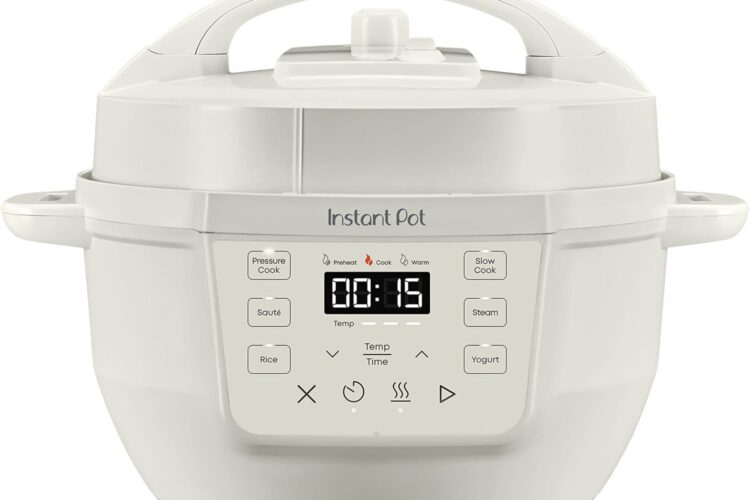
Is the Instant Pot RIO Mini 4QT Worth It? A Complete Guide for Curious Cooks
There is something oddly satisfying about owning a kitchen appliance that genuinely does what it promises. Not every gadget earns its counter space, but the idea behind multi-cookers has always been appealing — one device, multiple cooking methods, less clutter. The Instant Pot RIO Mini 4QT sits squarely in that category, and it has been generating consistent interest from people who cook for one or two, live in smaller spaces, or simply want a more compact version of the classic Instant Pot experience.
This article is not here to sell you anything. It is here to give you a thorough, honest look at what this appliance is, what it does, how it might fit into your kitchen routine, and what you should think about before deciding whether it makes sense for your situation. Whether you are completely new to pressure cooking or already familiar with the Instant Pot brand and just wondering if the mini version holds up, this guide covers it all.
What Exactly Is the Instant Pot RIO Mini?
The Instant Pot RIO Mini is a 4-quart multi-cooker from the well-established Instant Pot lineup. The “Mini” label refers to its capacity — at 4 quarts, it is smaller than the more commonly seen 6-quart and 8-quart models — but the word mini does not apply to its functionality. This is a 7-in-1 appliance, meaning it combines seven different cooking functions into one unit.
The model comes in a finish called Sea Salt, which is a clean, off-white color that tends to blend well with most kitchen aesthetics without looking sterile or industrial.
At its core, this is a pressure cooker. But it also operates as a slow cooker, a sauté pan, a steamer, a rice maker, a yogurt maker, and a food warmer. That range of functionality is part of what makes Instant Pot appliances appealing to such a wide audience.
Breaking Down the Seven Functions
Understanding what each mode actually does helps you figure out how useful this appliance would genuinely be in your day-to-day cooking.
Pressure Cooking
This is the flagship function and arguably the reason most people consider buying an Instant Pot in the first place. Pressure cooking works by sealing steam inside the pot, which raises the internal temperature above the normal boiling point of water. The result is food that cooks significantly faster than conventional methods.
Tough cuts of meat that would normally take hours in the oven can be ready in under an hour. Dried beans that require overnight soaking followed by a long simmer can be done in a fraction of the time. For people with busy schedules, this alone can change how practical home cooking feels.
Slow Cooking
On the opposite end of the time spectrum, the slow cook function lets you prepare meals low and slow, just like a traditional slow cooker. This is ideal for dishes that develop deeper flavor over several hours — stews, soups, braised meats, chili, and similar recipes. The benefit here is that you can set it up before you leave for work and come home to a finished meal.
Sauté
Most standalone slow cookers or rice makers do not include a sauté function, which is what makes multi-cookers like this more versatile. The sauté mode allows you to brown meat, soften onions, or toast aromatics directly in the pot before switching to another cooking method. This means fewer dishes to wash and better flavor development in your recipes.
Steaming
The steam function is useful for vegetables, fish, dumplings, and similar foods that cook well with moist heat. Steaming is generally considered one of the gentler cooking methods when it comes to preserving nutrients, and having it built into a multi-cooker means you do not need a separate steamer basket setup on the stovetop.
Rice Maker
The dedicated rice function takes the guesswork out of cooking rice. It adjusts time and temperature based on what the pot detects, which leads to more consistent results than trying to manage a pot on the stovetop. This works for white rice and can also handle other grains with some adjustment.
Yogurt Making
This is one of the less obvious but genuinely useful functions for people who eat yogurt regularly. The yogurt setting maintains a consistent low temperature over an extended period, which is exactly what you need to culture yogurt properly at home. Homemade yogurt is significantly cheaper per serving than store-bought, and you have complete control over ingredients.
Warming
The keep warm function activates automatically after cooking finishes in most modes, which means food stays at a safe serving temperature without continuing to cook. This is helpful when meals finish before everyone is ready to eat.
Design and Build: What You Are Actually Working With
The 4-quart capacity deserves a closer look because it shapes everything about how this appliance fits into real life. Four quarts is enough for roughly two to four servings depending on the recipe. For a single person or a couple, this is often exactly the right amount — enough to make a full meal with modest leftovers, but not so much that you are eating the same dish for five days.
The inner pot is made from stainless steel, which is generally preferred over non-stick coatings for durability and ease of cleaning. Stainless steel holds up better over time and does not require the same level of careful handling that coated surfaces do.
The control panel on the RIO is designed to be approachable rather than overwhelming. Instant Pot has refined their interface over multiple product generations, and the RIO reflects that. You get clearly labeled program buttons for each function, plus controls for adjusting pressure levels, time, and the keep warm setting.
The lid seals with a locking mechanism and includes a steam release valve. Understanding how to use the steam release — whether to let pressure drop naturally or to do a quick release — is one of the first things new users learn, and it becomes second nature quickly.
Practical Cooking Ideas for the RIO Mini
Knowing what the appliance can do in theory is one thing. Thinking through actual meal scenarios makes it more concrete.
Weeknight Soups and Stews
A simple chicken and vegetable soup can go from raw ingredients to a finished, flavorful broth in under 30 minutes using the pressure cook function. The small capacity of the 4-quart model means you are not making enormous batches, but for a household of one to three people, that is usually fine.
Batch-Cooked Grains
Brown rice, quinoa, farro, and similar grains are staples in many diets but can take a long time to cook on the stovetop. The pressure cooking function speeds this up considerably, and the rice mode handles standard white rice automatically.
Tender Braised Proteins
Chicken thighs, pork shoulder, or beef short ribs that would normally require oven time can be pressure cooked to a tender, fall-apart texture in a much shorter window. Using the sauté function first to build a fond before adding liquid results in significantly better flavor.
Dried Legumes Without the Waiting
Lentils, chickpeas, black beans, and other dried legumes are economical and nutritious but often avoided because of the time they take. The pressure cooker eliminates most of that barrier. Chickpeas that would take hours on the stovetop are done in under 45 minutes from dry, no soaking required.
Steamed Fish and Dumplings
A piece of salmon or a portion of frozen dumplings can be steamed quickly and cleanly. This is a lighter cooking method that works well for people who want less oil in their meals.
Homemade Yogurt
If you eat yogurt daily, the math on making your own is hard to ignore. You need milk and a small amount of existing yogurt as a starter culture. The yogurt function handles the incubation period, and the result is a plain, fresh yogurt that you can sweeten or flavor as you like.
Who Is This Appliance Likely to Suit?
No appliance is right for everyone, and being honest about the ideal user helps you make a better decision.
People cooking for one or two will find the 4-quart size genuinely well-matched to their needs. It is large enough to cook a proper meal but not so large that you are forced to scale up recipes constantly or deal with excessive leftovers.
Apartment and small kitchen dwellers often deal with limited counter space and minimal storage. A multi-cooker that replaces several separate appliances — a slow cooker, a rice cooker, a steamer — can be a practical way to consolidate without sacrificing functionality.
Beginner cooks who find the stovetop stressful or inconsistent may find that the automated programs and consistent results of the Instant Pot take away some of the anxiety from cooking. There is less active monitoring required compared to a pot on the stove.
Meal preppers who cook on a schedule may appreciate having a hands-off method that lets them set something going and focus on other tasks in the meantime.
Budget-conscious households can make the most of inexpensive ingredients — dried beans, cheaper cuts of meat, bulk grains — that benefit enormously from pressure cooking.
Things to Consider Before Purchasing
Being well-informed before buying any appliance is worthwhile, and there are a few practical considerations specific to this model.
Size Limitations for Larger Households
If you regularly cook for four or more people, the 4-quart capacity may feel limiting. Most Instant Pot recipes are written for 6-quart models, and scaling them down for a smaller pot requires some adjustment. For families or those who like cooking large batches for the week, the 6-quart model might be a better fit.
Learning Curve
First-time pressure cooker users often find there is a short adjustment period. Learning the difference between natural pressure release and quick release, understanding minimum liquid requirements, and getting a feel for cooking times all take a little practice. Most people find this straightforward after a few uses, but it is worth mentioning for complete beginners.
Not Ideal for All Cooking Methods
A multi-cooker is not a replacement for every kitchen tool. It does not bake, broil, or fry. If most of your cooking involves those methods, this appliance will have limited utility for you. It works best for moist-heat cooking methods — braising, steaming, simmering, and slow cooking.
Storage and Counter Space
Even at 4 quarts, this is not a small appliance. It needs counter space when in use and storage space when it is not. In a very small kitchen, this is worth thinking through.
Multi-Cookers in General: How the Category Compares
Rather than evaluating specific competitors, it is worth understanding the broader landscape of kitchen appliances that overlap with what a multi-cooker does.
Traditional slow cookers are simpler and often less expensive, but they only do one thing. If you already own a slow cooker and primarily use it, the added cost of a multi-cooker may or may not be justified depending on how much you would use the additional functions.
Rice cookers do one job extremely well, and dedicated rice cookers sometimes produce marginally better results than a multi-cooker’s rice function. For someone whose primary need is rice, a standalone rice cooker might be the more targeted choice. But if you want rice cooking plus other functions, the multi-cooker makes more sense.
Stovetop pressure cookers are often less expensive and do not require electricity, but they require more active monitoring and do not offer the additional cooking modes.
Stovetop cooking in general offers more precision and flexibility, but it requires your attention. A multi-cooker trades some of that flexibility for convenience and time-saving, which is a worthwhile tradeoff for many people.
Frequently Asked Questions
Is a 4-quart Instant Pot significantly smaller than a 6-quart?
Yes, there is a noticeable difference. The 4-quart holds roughly two-thirds of the capacity of a 6-quart model. For small households this is usually fine, but recipes designed for 6-quart pots often need adjustment when made in the smaller size.
Can you use standard Instant Pot recipes with the RIO Mini?
Most pressure cooker recipes work, but you may need to scale down ingredient quantities and check that liquid levels meet the minimum required for the pot to come to pressure. The required minimum liquid is generally around one cup, regardless of pot size.
How long does it take to come to pressure?
This varies depending on the volume of food and liquid in the pot, but typically ranges from 5 to 15 minutes. This pre-pressurization time should be factored into your total cooking time estimate.
Is the inner pot dishwasher safe?
The stainless steel inner pot is generally dishwasher safe, as is the steam rack. The outer base and lid should be wiped clean rather than submerged or placed in a dishwasher.
Is it safe to leave a multi-cooker running when you are not home?
The slow cooker and yogurt functions are commonly used with the appliance unattended, similar to how a traditional slow cooker is used. That said, general appliance safety guidelines suggest not leaving any cooking appliance unattended for very long periods without being nearby. Many people do use it while away from home without issue, but it is a personal decision.
Can it make oatmeal or porridge?
Yes, the pressure cook function handles oatmeal well. Steel-cut oats that would normally take 30 or more minutes on the stovetop can be ready in under 10 minutes of actual cooking time.
Does the yogurt function work with plant-based milk?
It can work with some plant-based milks, though the results vary. Coconut milk and cashew milk tend to work better than oat or rice milk. The process requires a compatible thickening agent or starter culture designed for non-dairy milk, and some experimentation may be needed.
Final Thoughts
The Instant Pot RIO Mini 4QT is a practical, multi-functional kitchen appliance with a clearly defined audience. It is not trying to replace every cooking tool in your kitchen, and it would be unrealistic to expect it to. What it does offer is a compact, capable multi-cooker that handles a wide range of everyday cooking tasks in one unit — particularly useful for small households, time-limited cooks, and anyone who wants to simplify their kitchen setup without giving up versatility.
The 7-in-1 functionality is genuinely broad for an appliance this size. Pressure cooking, slow cooking, sauté, steam, rice, yogurt, and warming cover a significant portion of what most people cook on a regular basis. The 4-quart capacity keeps things manageable for one to three people, and the Sea Salt color is a thoughtful design choice that fits modern kitchen aesthetics without being distracting.
If you have been curious about trying an Instant Pot but felt that the standard 6-quart was too large for your needs, the RIO Mini is worth looking into. And if you are completely new to multi-cookers, this is a well-regarded entry point into a style of cooking that many people find genuinely changes how they approach meal preparation.